History of WDSCC
A Proud History of the Warwick District Sporting Car Club
Information and imagery taken from WDSCC 50th anniversary booklet
Foundations and Early Enthusiasm (1954–1957)
The Warwick District Sporting Car Club was founded on 14 December 1954 following a meeting held in the lounge room of the Imperial Hotel, with Stan Collins in the chair. Like many grassroots motor sport clubs of the era, the club was built on enthusiasm, volunteer effort and a shared passion for competition.
By early 1955, that enthusiasm had translated into action. The club ran its first night trial in February, followed by its first daylight car trial in April. Later that year, the Warwick Daily News 150 Mile Rally helped establish the club’s presence within the region. In these early years the club also explored ways to promote its events more widely, even advertising upcoming competitions at the local movie theatre.
Despite this promising start, maintaining momentum proved challenging. By March 1957, declining interest led to a motion to disband and immediately reform the club in the hope of revitalising participation. Around this time, the club also investigated affiliating with CAMS (the Confederation of Australian Motor Sport), reflecting its desire to operate within the broader motor sport framework.
Persistence Through Recess and Renewal (1958–1964)
The late 1950s and early 1960s were a testing period. The club unaffiliated with CAMS in 1958 but secured Post Office Box 16, a small but enduring detail that remains part of the club’s identity to this day.
Attention briefly turned toward go-karting, with discussions around building a track and even offers of private land for development. However, by 1961 the club entered recess, and no activities were held for several years.

Renewal finally came in June 1964 when the club was reformed and reaffiliated with CAMS. Determined to rebuild interest, members organised public displays such as a motor gymkhana demonstration at the Warwick Rodeo and creative events like radio-based scavenger hunts. These efforts marked a turning point and laid the groundwork for future growth.
Hill Climbs, Gymkhanas and the Birth of Morgan Park (1964–1969)
The mid-1960s were characterised by experimentation and ambition. In 1964, plans for a hill climb on Weewondilla Hill came to fruition, with CAMS inspection, official support and strong community involvement. The event was formally opened by the Mayor, with officials supplied by QMORA, a significant achievement for a regional club.
At the same time, discussions began with Warwick Shire Council about securing land at Morgan Park. Throughout the following years, the club invested heavily in facilities, equipment and infrastructure, often through second-hand materials and volunteer labour.
By 1967, a new gravel hill climb track known as Weewondilla II was completed and opened with the Warwick Gold Cup Rodeo Hill Climb Championship. Momentum continued into 1968 when serious planning began for a permanent motor racing circuit at Morgan Park. Fencing, grading, safety measures and the concept of a control tower were all debated and progressed, despite limited funds and resources.
In 1969, challenges including material shortages and limited member availability threatened to delay the first race meeting. Nevertheless, the club pressed on, demonstrating a resilience that would become a defining characteristic.
Establishing Morgan Park Raceway (1970–1979)
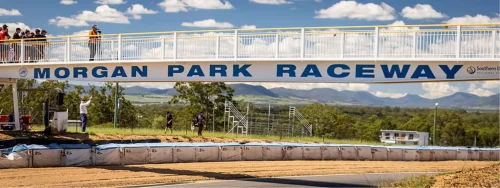
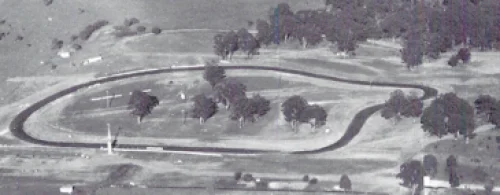
The official opening of Morgan Park Circuit took place in October 1970 during the Rodeo Race Meeting, which even attracted television coverage, a major milestone for the club. As racing activity increased, so too did the need for rules, safety standards and ongoing maintenance.
The 1970s were a decade of highs and lows. Weather disruptions, financial pressures and declining interest at times placed the circuit’s future in doubt. There were serious discussions about closing Morgan Park altogether, while facilities frequently required urgent repair.
Despite these challenges, innovation continued. Handicap racing was trialled, new forms of competition were explored, and cooperation with other clubs helped keep events viable. In 1979, the club proudly celebrated its 25th anniversary with a full week of festivities, including a major race meeting and anniversary dinner, a clear sign that the club had endured.
Facilities, Fundraising and Formalisation (1980–1989)
The 1980s brought a renewed focus on infrastructure and long-term sustainability. Vandalism, deteriorating track conditions and funding shortages tested the club’s resolve, but creative fundraising ideas such as “Buy a Brick” campaigns reflected the members’ determination.
A major step forward came in 1987 when the club became incorporated, providing a stronger legal and organisational footing. This was quickly followed by the decision to finally proceed with building a clubhouse, which was officially opened on Australia Day in 1988.
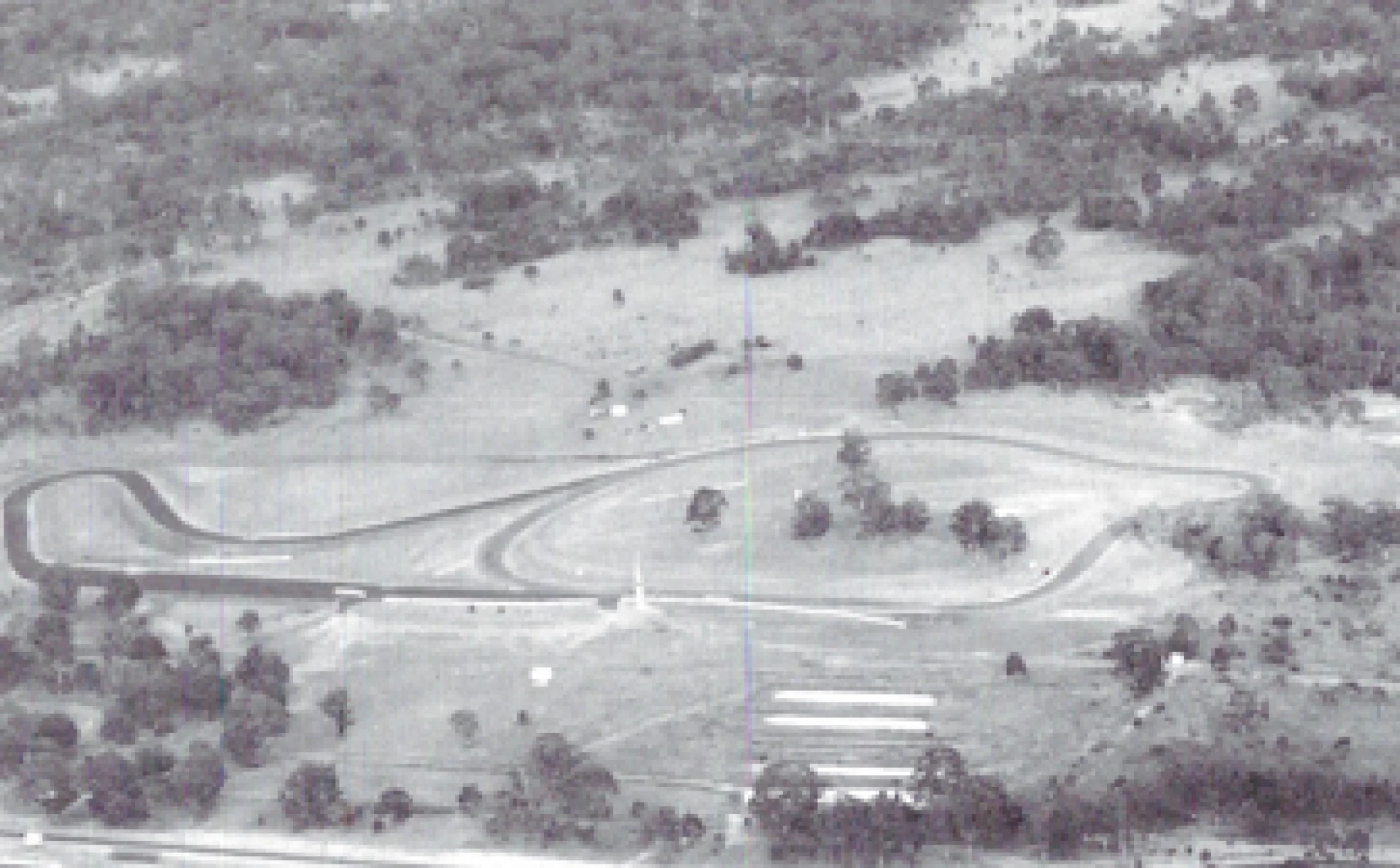
At the same time, changes to track layout and growing insurance requirements highlighted the increasing complexity of running a motor sport facility. By the end of the decade, insurance difficulties once again forced a temporary halt to racing.
Survival, Recovery and Growth (1990–1999)
The early 1990s were marked by frustration, with racing suspended due to the inability to secure public liability insurance. Nevertheless, the club’s spirit remained intact. Reunions of past competitors celebrated the club’s heritage, and by 1993 racing returned to Morgan Park Raceway.
The club’s 40th anniversary in 1994 was marked with a formal dinner, while practical improvements continued with the construction of a new canteen and increasing interest in drag racing development.
By the late 1990s, significant progress was being made. Council-supported low-interest loans enabled major upgrades, including bitumen surfacing of the original circuit and preparation for extensions. Night racing, fireworks and historic events added new dimensions to the race calendar and attracted broader audiences.
A State-Level Facility and a 50-Year Legacy (2000–2004)
The new millennium marked a transformation for Morgan Park Raceway. Pit lane garages, improved amenities, and expanded circuits elevated the venue to state-level standards. The Queensland Super Sprint Series began, quickly growing in popularity and scale.

Major volunteer-driven projects defined this era, from constructing race control towers in a single weekend to installing timing towers, pedestrian bridges and services sourced from iconic events such as the Sydney 2000 Olympics.
By 2004, the club celebrated its 50th anniversary with a landmark race meeting featuring historic touring cars, formula cars and sports cars, supported by local Warwick motor dealers. Infrastructure continued to improve with extended pit lanes, upgraded canteen facilities and sealed access roads.
A Continuing Legacy
From humble beginnings in a hotel lounge room to a respected motor racing venue, the Warwick District Sporting Car Club’s history is one of perseverance, community support and volunteer dedication. Its story is not just about racing, but about people members, officials, families and supporters who ensured that motor sport would continue to thrive in Warwick for generations to come.